Why most “travel first aid kits” fall short abroad
Many kits sold online as travel first aid kits contain mostly bandages, scissors and antiseptic wipes. Those help with cuts, but the problems that actually ruin trips are loose motions, fever, acidity, allergies and motion sickness — and for those you need medicines, dosing guidance and sometimes a doctor.
The 8 things to check before you buy
| What to check | What good looks like |
|---|---|
| 1. Ailments covered | Stomach, fever & pain, allergy, motion sickness, cold & cough, and first aid — not only bandages |
| 2. Doctor-curated | Medicines chosen and dosed by a qualified doctor for travel |
| 3. Prescription included | A signed prescription listing the medicines, useful at security or customs |
| 4. Regulated medicines | CDSCO-regulated medicines from licensed manufacturers |
| 5. Expiry | Every item has a printed expiry date with long remaining shelf life |
| 6. Organisation | Clearly labelled, colour-coded compartments and an English dosage guide |
| 7. Flight-friendly | Liquid-free, blister-packed medicines in a compact, sturdy pouch |
| 8. Doctor support | A way to speak to a doctor when you are unsure what to take |
Your options compared
| Option | Pros | Cons |
|---|---|---|
| Pack your own from a pharmacy | Fully customised | Takes time; easy to miss categories; no prescription or dosing guide |
| Generic first aid kit | Cheap and compact | Mostly bandages; few or no medicines |
| Doctor-curated travel medical kit | Complete, organised, documented, with doctor support | Costs more than a basic first aid kit |
Who needs a complete kit most
- Families travelling with elderly parents.
- Travellers going to Southeast Asia, the Middle East or long-haul destinations where food and climate change a lot.
- Anyone travelling to countries where medicines need a local prescription, such as most of Europe, Japan and Singapore.
- Students and professionals moving abroad for months.
How TravelMed meets these criteria
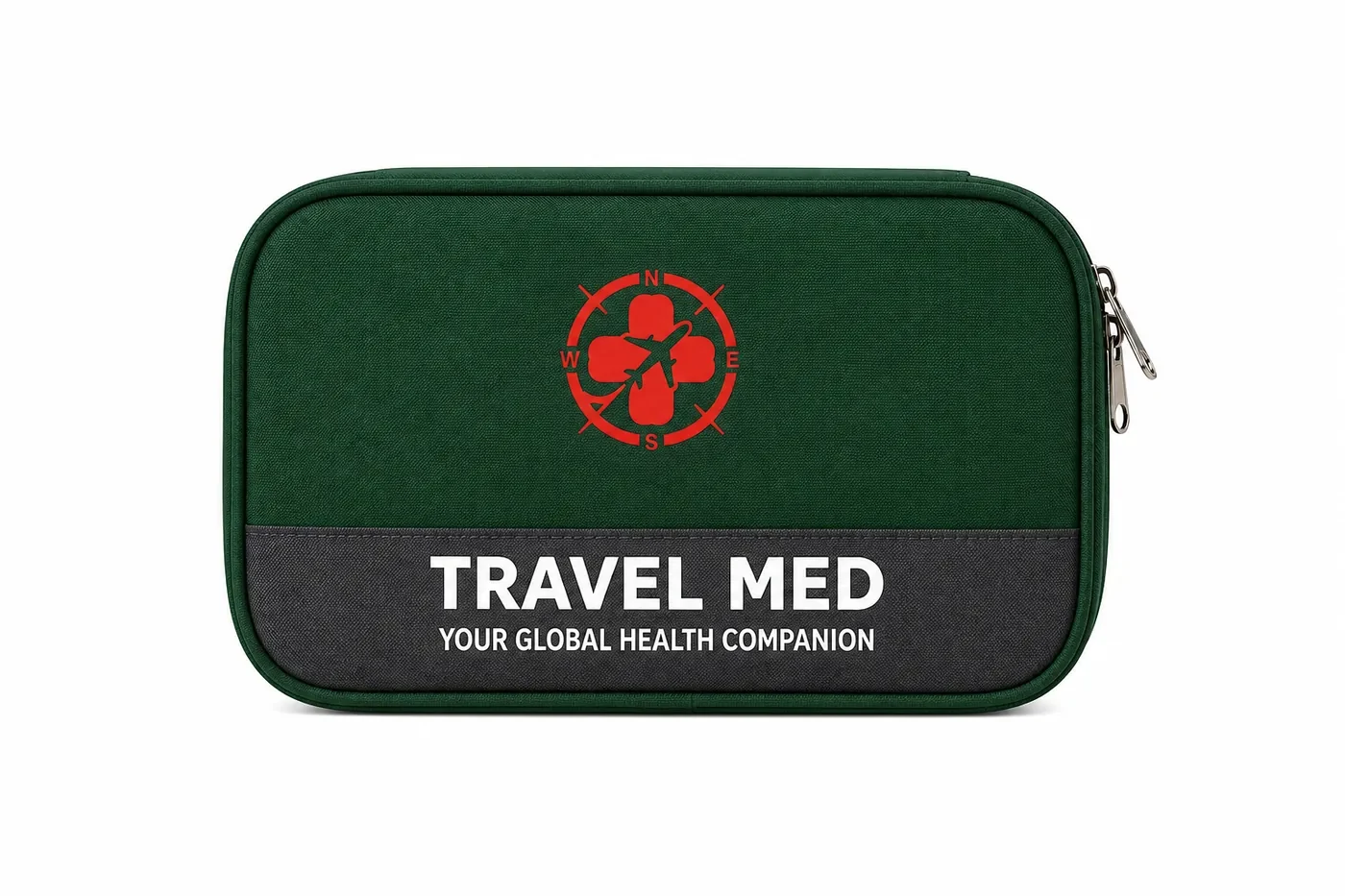
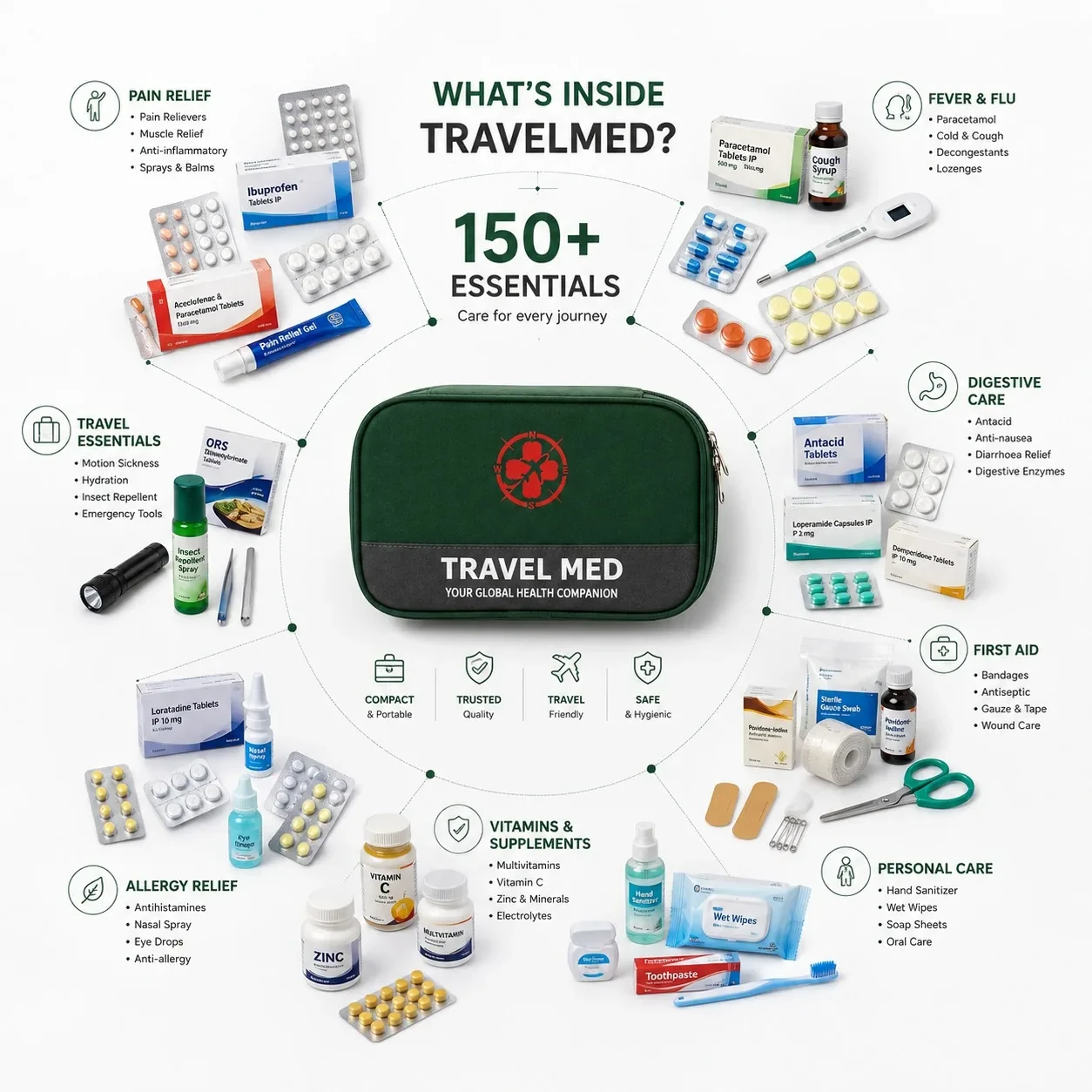
TravelMed was created by a doctor for exactly this checklist: 150+ medicines and essentials across 17 categories, a signed prescription, colour-coded compartments with an English dosage guide, liquid-free packaging, and 2 free doctor teleconsultations — for the current listed price with free shipping across India.
Frequently asked questions
What should a travel medical kit contain?
Medicines for stomach upsets (ORS, antidiarrhoeal, antacid, probiotic), fever and pain, allergies, motion sickness, cold and cough, plus first-aid items like bandages, plasters and cotton.
Is a first aid kit enough for international travel?
Usually not. Basic first aid kits focus on cuts and wounds, while most travel illnesses — stomach upsets, fever and allergies — need medicines and dosing guidance.
How much does a good travel medical kit cost in India?
Basic first aid kits are cheaper but contain few medicines. The doctor-curated TravelMed kit costs the current listed price and includes 150+ medicines, a signed prescription and 2 free doctor consultations.

Medically reviewed by
Dr. Chitarth Rajasekaran
Founder & Medical Director · MBBS, MS Ortho, DNB Ortho, MRCS (Edin), Fellow in FIJR, FISS
A practising surgeon and frequent traveller, Dr. Chitarth founded TravelMed after a family trip abroad was derailed by a minor illness.
Read his storySources
This article is general information for travellers and is not a substitute for personal medical advice. Medicine-import rules change — always confirm with the destination’s official health authority or embassy.
Found this useful? Share it with your travel group.